Eat With the Season, Savor the Moment

If you've ever walked through the Pueblo Farmers Market in the summer and wondered why you're not seeing overflowing bins of bright salad greens, tender spinach, or rainbow-hued carrots, you're asking exactly the right question. And the answer says everything about where we farm, how our land lives and breathes, and why the things that do show up at our family tables deserve to be treated like the rare, fleeting gifts they truly are.
Out here in the lower Arkansas Valley of Southeastern Colorado, we don't get a gentle, prolonged spring like the parts of the country you might have seen on cooking shows or food blogs. Spring doesn't ease in with weeks of soft, cool days perfect for leafy greens. Instead, it tends to arrive briefly, sometimes violently, before summer blazes in with temperatures that would wilt a head of lettuce in an afternoon. It's a climate that demands you pay attention, and if you're a farmer, it demands even more.
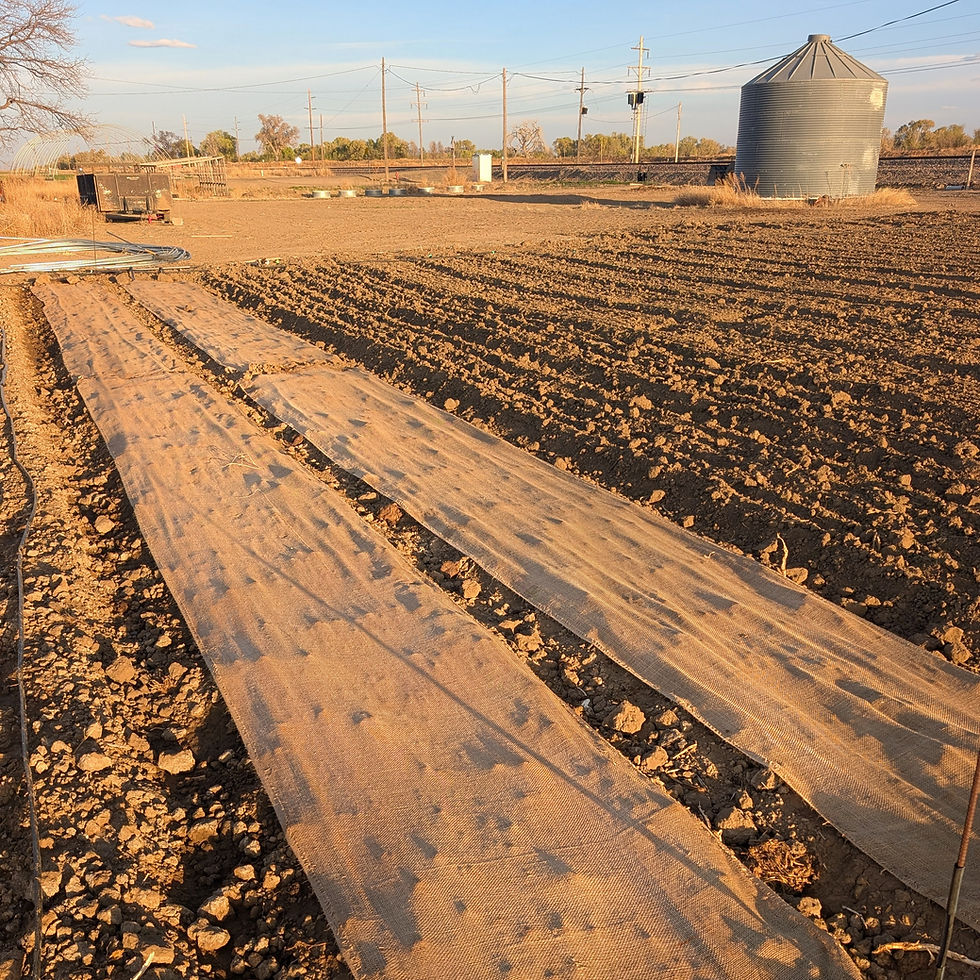
At Sweet Valley Farm, I grow organic heirloom vegetables and herbs with a deep respect for this land and what it wants to grow. That means working with the seasons rather than fighting them, and sometimes, it means working against the clock to bring you something delicate and special before the heat says otherwise.
"Eating seasonally isn't a trend or a foodie lifestyle choice. It's the way humans have eaten for most of our existence, and our bodies still know it."
What Southeastern Colorado's Climate Actually Looks Like
Most people think of seasons as four distinct chapters: a cool spring, a warm summer, a crisp fall, a cold winter. In many parts of the country, that rhythm holds. Cool-season crops like lettuces, kale, spinach, and carrots get a solid six to eight weeks in spring to thrive in that sweet spot between frost and heat. Farmers can fill market tables with green abundance.
Here, that window is compressed to a narrow breath. Frost can linger well into late April or even May, then by mid May or June, temperatures are already surging into the upper 90's. For cool-season crops, that's the end of the line. They bolt, turn bitter, wilt, or simply refuse to thrive anymore. Carrots are a challenge to just get to germinate, as they require consistent darkness and moisture until they sprout. That alone can take 7-21 days - not exactly the easiest feat with our incessant windy days of spring. The heat-loving crops, tomatoes, peppers, eggplants, summer squash, are what this land genuinely wants to grow, and they do it with stunning abundance from midsummer onward.
This isn't a failure of the farmer. It's the reality of our geography and climate. The Arkansas Valley sits at an elevation and latitude that creates these compressed transitions, and the relentless Colorado sun doesn't negotiate with cool-season crops past a certain point.
The Colorado Growing Reality at a Glance:
Cool-season window: Roughly mid March through mid-to-late April — then the heat arrives fast in May. This year it dropped in on us like Cousin Eddie, throwing us all for a loop.
Peak summer abundance: July through September — tomatoes, peppers, eggplants, squash, and melons thrive in our intense sunshine.
Fall cool-season: A brief return in September and October if conditions allow — but it's never guaranteed. We typically have our first frosts in mid October.
The Short Season Crops Worth Waiting For
Here at Sweet Valley Farm, along with a handful of other dedicated growers at the Pueblo Farmers Market, I work hard to give you those cool-season treasures during the narrow window we have. I start seeds early under cover, time plantings carefully, and put in twice the labor that a farmer in a more forgiving climate might. I do it because I believe in the full table, and because these crops, grown in heirloom varieties with genuine flavor, are something worth chasing, something I want on my plate. You'll fully understand that once you try my asparagus this spring.
When you see these things at my market stand, I gently ask you: don't walk past them. They won't be around long.
Asparagus: Perhaps the most fleeting crop I grow, and the one that signals spring has truly arrived. Asparagus has an extraordinarily short harvest window here in the Arkansas Valley, typically early April through mid-May before the heat shuts it down entirely. Unlike most vegetables, asparagus is a perennial crop that takes years of patient tending before it ever produces a single spear. When you see it at my stand, it represents not just this season's work but years of care for the same plants. Buy it, eat it fresh, and don't wait, because in a matter of weeks, it's gone until next year.
Lettuces & Salad Mix: Tender, complex, and nothing like the bag from the grocery store. My heirloom varieties are buttery and flavorful, grown in open air under Colorado skies for just a few precious weeks.
Kale, Chard & Collards: Nutrient-dense and deeply flavored when grown cool and slow. Heirloom kale varieties develop a complexity that modern hybrids simply can't match, and they're at their peak before summer heat sets in. Chard can continue to be harvested into summer depending on high temperatures and moisture.
Carrots & Root Vegetables: A carrot grown in cool soil and pulled at the right moment is practically a different vegetable. Sweet, earthy, and alive. My heirloom carrots are my signature crop at market - plucked straight from the market garden, crunchy and sweet. Kids love 'em!

Spinach: One of the most nutritionally dense crops I grow, spinach is also one of the most heat-sensitive. My spring spinach is grown carefully against the clock, available briefly, packed with nutrients, and worth every bite.
Why Eating Seasonally Is What Our Bodies Actually Want
We have centuries of food marketing to unlearn. The modern grocery store has trained us to expect everything, always, strawberries in January, butternut squash in April, lettuce in August. It feels like abundance, but it comes with a cost: most of that produce is grown far away, picked underripe, shipped cold, and bred for durability rather than nutrition or flavor. Supermarket tomatoes are picked green to turn red by the time they hit store shelves. Apples are picked, stored, and gassed to keep them from rotting. That is just unnatural.
Seasonal eating is how humans ate for the vast majority of our existence. Spring greens arrived when our bodies were coming out of winter, and those leafy crops are packed with the vitamins and minerals we need after months of heavier eating. Summer fruits and vegetables carry high water content, antioxidants, and energy for active warm months. Root vegetables and storage crops in fall and early winter provide dense nutrition to carry us through colder times.
This isn't a coincidence. It's co-evolution. Our biology and the natural harvest cycle developed together over thousands of years. When you eat a fresh-picked head of lettuce in May from a farm that grew it in your local soil, you're eating something aligned with the season your body is in, not something engineered to survive a two-week refrigerated truck journey.
Beyond nutrition, there's the simple truth of flavor. A tomato that ripens on the vine under full Colorado sunshine in August tastes like a tomato is supposed to taste. Lettuce grown slowly in cool spring air has a tenderness and complexity that hothouse lettuce can't replicate. When food is grown in its proper season, it simply tastes better, and that's not nostalgia talking. It's biology.
"When something is only available for three or four weeks, and a farmer worked twice as hard to grow it in a challenging climate, that thing is worth stopping for."
A Quick Note on Heirloom Varieties
At Sweet Valley Farm, I grow almost exclusively heirloom varieties, open-pollinated seeds that have been saved and passed down across generations, sometimes for hundreds of years. Unlike modern hybrid varieties bred primarily for shelf life and uniform appearance, heirlooms are bred for flavor, nutrition, and adaptability. Each variety has a story, a region of origin, and a flavor profile that makes it distinct. You'll notice the difference the first time you taste one. I'll be doing a full blog post on the heirloom versus hybrid conversation in a week or two as we prep for the annual spring plant market, but for now, just know that when you see "heirloom" on my banner, it means something real.
How to Shop the Market With the Seasons
The best advice I can give any farmers market shopper in our region is this: let the market lead. Don't come in with a rigid recipe that requires ingredients that aren't in season. Instead, see what's there, what looks vibrant, what the farmers are excited about, and let that guide what you cook this week. That's a skill that deepens over time, and it connects you to your food in a way no grocery store ever can. Food is supposed to be special. We need to return to that beautiful connection with it rather than always being stressed about what's for dinner.
In spring, lean into the greens and other cool weather crops. In summer, let the tomatoes, eggplant, peppers and sweet corn take over your kitchen entirely. In fall, celebrate the roots and the winter squash. Each season has its gift, and part of the joy of farmers market shopping is learning to receive those gifts with gratitude and a little urgency. Eating with the seasons is actually very exciting once you go with the flow.
And when a farmer is selling something beautiful that you've never seen before, a dark purple carrot, a frilly kale with a name like Lacinato or Red Russian, a spinach variety with leaves like crinkled velvet, please stop and ask about it. We love talking about what we grow, and we love knowing that it's landing in the hands of someone who's going to give it the attention it deserves. We appreciate when customers are as passionate about our produce as we are!
This land is demanding, and growing food on it is an act of love and stubbornness in equal measure. When you buy from me, you're part of that story. Thank you for joining me at my table this season. I'll see you at market!
Brett


Comments